
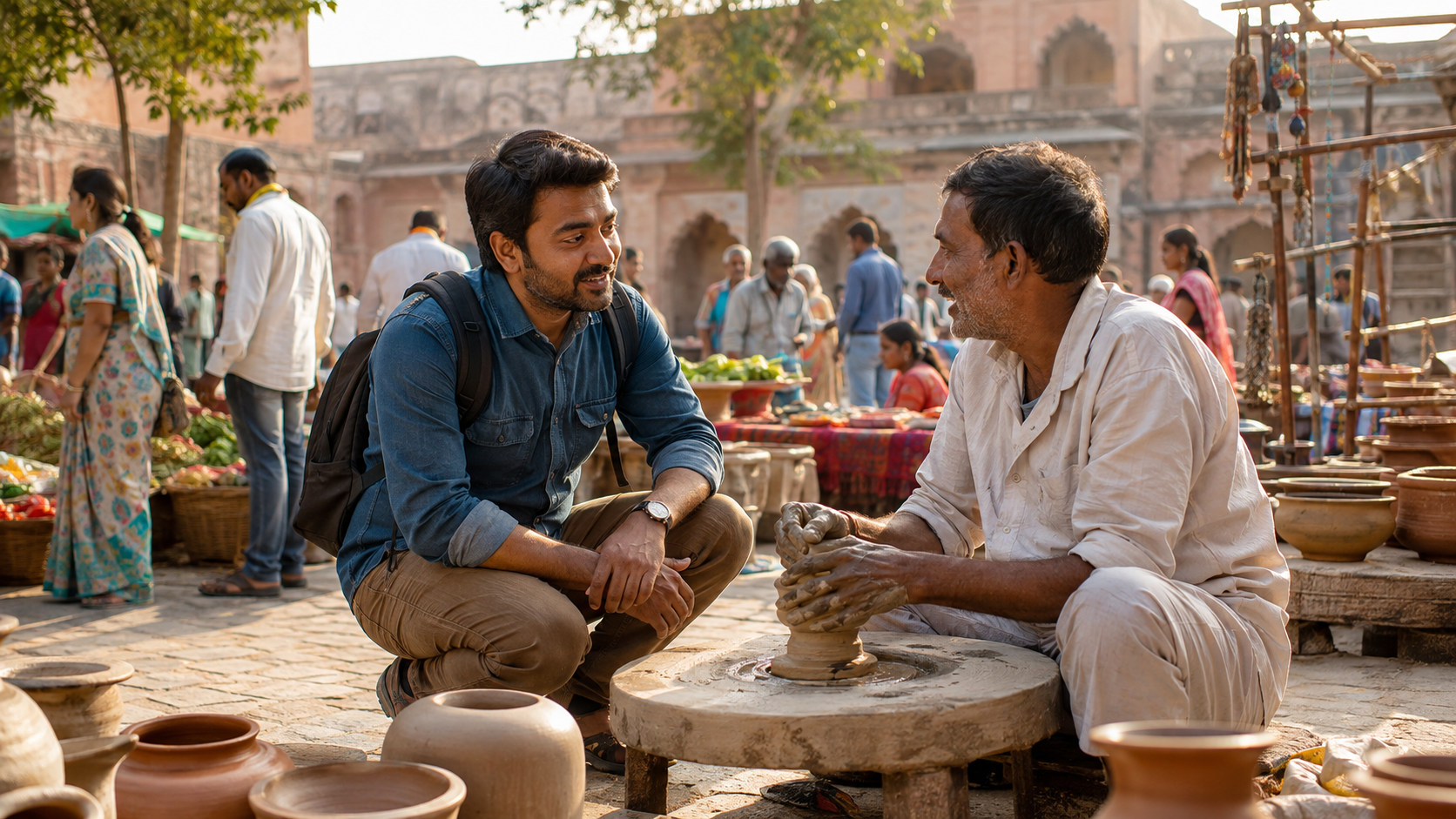
When we plan a trip, we usually begin with places.
We search for famous monuments, scenic viewpoints, popular cafés, beaches, markets, and everything else we want to see. But when the journey is over, the strongest memories are not always connected to those attractions.
Sometimes it is the shopkeeper who helped you find the correct bus, the homestay owner who shared a local story, or the family recipe you tasted at a small restaurant.
Destinations give us a reason to travel, but people and culture give every journey its personality.
Culture Lives in Everyday Moments
Culture is not limited to museums, monuments, and festivals. It can be found in the ordinary rhythm of a place.
It appears in the way people greet one another, the time at which markets become busy, the food served for breakfast, the language used in local songs, and the traditions followed at home.
Wake up early in a new city and observe how the streets begin their day. Visit a neighbourhood market, sit inside a small café, or travel using local public transport when it is safe and practical.
These everyday experiences may not appear in a typical itinerary, but they often show you what the destination truly feels like.
Speak to Local People
You do not need to have a long conversation with every person you meet. Even a simple interaction can add meaning to your trip.
Ask a café owner which local dish they recommend. Speak to an artisan about how a product is made. Ask your host about the neighbourhood or a tradition you noticed.
Most importantly, listen with genuine interest instead of treating the conversation as something to collect for social media.
Local people are not part of a tourist attraction. They are individuals living their everyday lives, so every interaction should begin with respect.
Learn a Few Words of the Local Language
You may not be able to learn an entire language before a short trip, but remembering a few basic words can make a noticeable difference.
Try learning how to say:
Hello
Thank you
Please
Yes and no
How much?
Where is this place?
The name of a popular local dish
Your pronunciation does not need to be perfect. The effort itself often creates a warmer interaction and shows that you respect the local language.
If you are unsure, politely ask someone how a word should be spoken rather than pretending to know it.
Understand the Story Behind the Food
Food is one of the easiest and most enjoyable ways to experience a culture.
A regional dish often reflects the local climate, crops, history, migration, and family traditions. Coastal communities may depend on seafood and coconut, while mountain regions may prepare food designed for colder weather.
Instead of ordering only familiar dishes, try something that belongs to the destination. Ask how it is prepared or when it is usually eaten.
You do not have to enjoy every flavour. Trying food respectfully is about understanding the place, not forcing yourself to like everything.
Visit Local Markets
Markets bring together food, language, clothing, crafts, and everyday conversations.
A market can help you understand what people eat, what they produce, and how daily life moves through the destination. Walk slowly, observe what is being sold, and speak politely to vendors.
If you purchase something, choose products made locally when possible. Handmade textiles, pottery, artwork, spices, and regional snacks often make more meaningful souvenirs than mass-produced items.
Bargaining may be common in some markets, but it should remain respectful. Saving a very small amount may matter less to you than it does to the person who created or sold the item.
Attend Festivals With Respect
Festivals can offer a powerful introduction to local music, food, clothing, faith, and community traditions.
Before attending, learn what the event represents. Some celebrations welcome visitors freely, while certain rituals may be private or require specific behaviour.
Follow local guidance, dress appropriately where necessary, and avoid blocking participants while taking photographs.
A festival is not organised only for tourists. You are entering an event that may have deep personal or religious meaning for the people celebrating it.
Ask Before Photographing People
A colourful outfit, an interesting workspace, or a meaningful ceremony may look like the perfect photograph. However, being in a public place does not automatically mean someone wants to be photographed closely.
Ask permission before taking a clear picture of an individual, especially artisans, performers, vendors, and children. Respect the answer if they decline.
Do not interrupt people who are working, praying, or participating in a private moment just to create a better travel photograph.
The memory of a respectful interaction is worth more than a picture taken without permission.
Choose Local Experiences Thoughtfully
Local guides, community tours, workshops, and family-run businesses can help you understand a destination beyond its famous attractions.
You might join a cooking class, learn about a traditional craft, take a heritage walk, or visit a farm or plantation.
Look for experiences that treat local people fairly and explain their culture responsibly. Avoid activities that turn communities into displays or encourage visitors to ignore personal boundaries.
A meaningful cultural experience should benefit both the traveller and the people sharing their knowledge.
Do Not Compare Everything With Home
It is natural to notice differences while travelling. The problem begins when every difference is treated as strange, inconvenient, or inferior.
Food may be prepared differently. Shops may open at different times. People may dress, communicate, or celebrate in ways you are not familiar with.
Instead of immediately judging, ask why things work that way. Customs often make more sense when understood within their local history and environment.
Travel becomes more valuable when curiosity replaces comparison.
Record the People Behind Your Memories
When documenting a journey, do not write only about the places you visited.
Remember the people who made the experience easier, warmer, or more interesting. You can record:
The recommendation given by a local shopkeeper
A story shared by your guide
A meal prepared by your host
A craft demonstrated by an artisan
A helpful conversation during the journey
A tradition you witnessed for the first time
A local word or phrase you learned
Avoid sharing someone’s full name, photograph, or private information publicly without permission. You can preserve the memory while still respecting their privacy.
Final Thoughts
The most memorable journeys are not always built around famous attractions.
They are shaped by conversations, flavours, traditions, unexpected kindness, and the small moments that help us understand how other people experience the world.
Visit the landmarks and take the photographs, but also slow down enough to notice the life surrounding them.
A destination may first attract you because of its beauty. It is often the people and culture that give you a reason to remember it.
Conversation
0 comments