
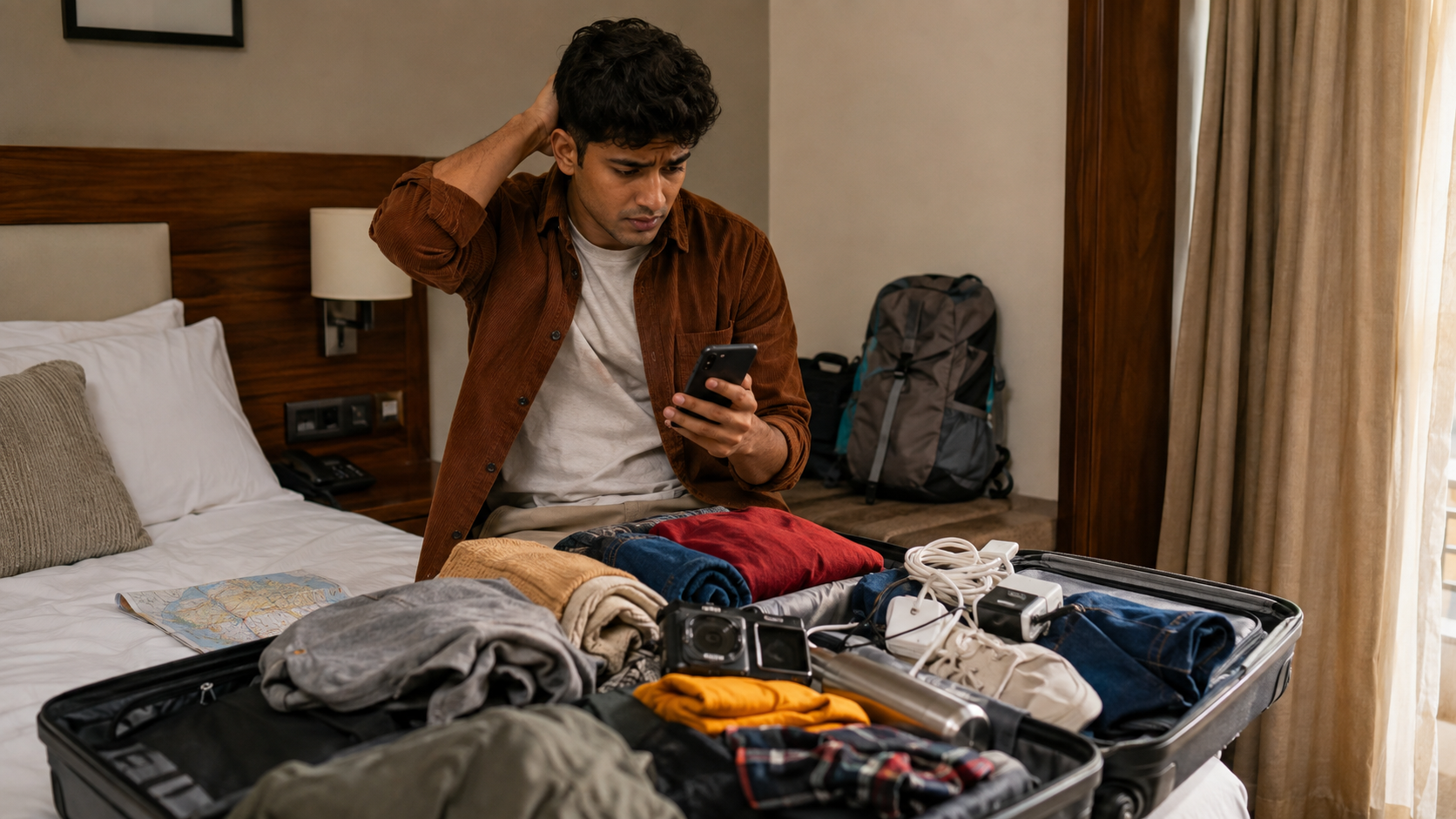
Planning a trip is exciting. You save reels, make lists of places to visit and imagine everything going perfectly. But real travel rarely follows the exact plan.
A delayed train, an overpacked suitcase or a hotel booked in the wrong location can change the entire experience. Most travel mistakes are not disastrous, but they can waste your time, increase your expenses and leave you feeling exhausted.
Here are ten common mistakes travellers make, and how you can avoid them.
1. Trying to Cover Too Many Places
The most common mistake is turning a holiday into a race.
Visiting five cities in five days might look impressive on an itinerary, but in reality, you will spend most of your time checking out of hotels, carrying luggage and travelling between destinations.
Choose fewer places and give yourself enough time to experience them properly. One peaceful evening at a local café can become more memorable than hurriedly visiting four tourist attractions.
A trip should feel like a break, not another deadline.
2. Creating an Overly Strict Itinerary
Having a plan is useful, but planning every hour can make the journey stressful.
Traffic, weather, long queues and unexpected closures can easily affect your schedule. Sometimes you may also discover a beautiful place and want to stay there longer.
Plan one or two major activities each day and keep the rest of the schedule flexible. This gives you enough direction without making you feel guilty whenever the plan changes.
Some of the best travel moments are usually the ones you never planned.
3. Booking a Cheap Hotel Without Checking Its Location
A low hotel price can be tempting, but the cheapest option is not always the most economical.
If your hotel is far from the main attractions, you may spend extra money and several hours travelling every day. A slightly more expensive hotel in a convenient area can actually save both time and transportation costs.
Before booking, check the hotel’s exact location on a map. Read recent reviews and search for nearby public transport, restaurants and medical facilities.
Do not rely only on phrases such as “near the city centre” in the hotel description.
4. Packing for Every Possible Situation
Many of us pack clothes while imagining situations that will probably never happen. The result is a heavy suitcase filled with items we do not use.
Choose comfortable clothes that can be mixed and matched. Carry one extra outfit for emergencies, but avoid packing your entire wardrobe.
Remember to check the destination’s weather before packing. Mountain trips may require layers, while beach destinations need lighter clothing, sun protection and comfortable footwear.
Leave a little empty space in your bag for anything you purchase during the journey.
5. Ignoring Travel Time Between Places
Two attractions may appear close on a map but still take a long time to reach because of traffic, road conditions or limited public transport.
This is especially important in hill stations, where covering a short distance can take several hours. Ferries, mountain roads and local buses may also operate according to fixed schedules.
Check realistic travel times instead of looking only at distance. If a route looks uncertain, ask your hotel or a reliable local operator before finalising the day’s plan.
Adding a small time buffer can prevent a lot of unnecessary stress.
6. Depending Only on Online Reviews
Online reviews are helpful, but they should not decide your entire journey.
A popular café may have thousands of reviews and still feel overcrowded. Meanwhile, a simple family-run restaurant with fewer ratings might serve the most memorable meal of your trip.
Use reviews to check cleanliness, safety and consistency, but remain open to local recommendations. Ask your hotel staff, drivers or shopkeepers where they personally like to eat or spend time.
Travelling becomes more interesting when every decision is not based on an algorithm.
7. Forgetting to Keep Offline Copies
Mobile internet does not work perfectly everywhere. You may lose connectivity in the mountains, on highways, at beaches or while travelling between cities.
Download offline maps before leaving your hotel. Keep screenshots or offline copies of your hotel address, tickets, booking confirmations and emergency contacts.
Important documents should also be stored securely in more than one place. Keep the originals protected and avoid sharing personal identification documents unnecessarily.
A few minutes of preparation can save you from a very confusing situation later.
8. Spending the Entire Trip Taking Photos
Photographs preserve memories, but constantly searching for the perfect picture can stop you from enjoying the actual place.
Take a few good photos, then put the phone away. Watch the sunset without recording the entire thing. Enjoy your food while it is still warm. Look around during the drive instead of spending the journey editing pictures.
Your trip does not need to look perfect on social media to be meaningful.
Sometimes the moments you do not photograph become the ones you remember most clearly.
9. Ignoring Rest and Proper Meals
Travellers often wake up early, walk throughout the day and stay out late because they want to “make the most” of the trip. After a few days, tiredness begins to affect everyone’s mood.
Leave time for proper meals, enough sleep and occasional breaks. Carry water and simple snacks when travelling to remote places, and do not ignore signs that you need rest.
Taking a slow afternoon does not mean you wasted the day. It may help you enjoy the rest of the journey much more.
10. Expecting Everything to Go Exactly as Planned
No matter how carefully you prepare, something may still go wrong.
It could rain on the day of your outdoor plan. A tourist attraction might be closed. Your transport may be delayed, or the famous viewpoint could be covered in fog.
Instead of allowing one problem to spoil the entire trip, look for an alternative. Visit a local market, try a regional dish, spend time talking to your travel companions or simply enjoy the unexpected pause.
Travel teaches you that a changed plan is not always a ruined plan.
Final Thoughts
A good journey is not one where everything happens perfectly. It is one where you return with new experiences, funny stories and moments that still make you smile.
Plan carefully, but do not control every minute. Pack thoughtfully, but do not carry your entire home. Take photographs, but remember to experience the place with your own eyes too.
In the end, travelling is less about completing an itinerary and more about enjoying everything that happens between the plans.



Conversation
0 comments